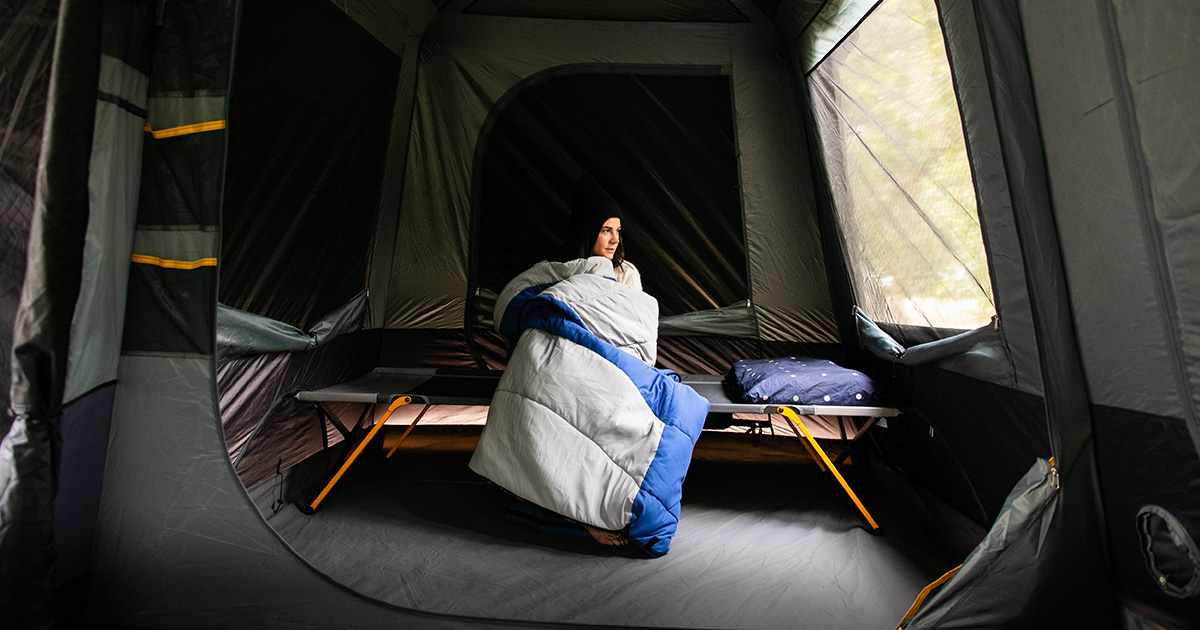
The height of a camp stretcher and the design of the tent can significantly impact how much available space there is for sleeping gear. For example, a stretcher height can reduce usable space in a tent by up to 45 centimeters due to sloping walls. This is crucial information for campers looking to maximize space when choosing a tent and stretcher combination.
Using stretchers inside tents offers various benefits, such as elevating sleepers off the ground, which is particularly appreciated by older campers. Stretchers free up storage space underneath, making room for gear that would otherwise take up valuable floor space in a tent. However, a stretcher and a mattress of the same dimensions will not always fit correctly in a tent due to design differences.
It's important to understand the specific measurements for your tent style when considering a stretcher. For instance, in cabin-style tents with flat, upright walls, the space is reduced less than in dome tents, where sloped walls can minimize space significantly. A traditional 3-4 person dome tent may lose around 20 centimeters of space with a stretcher, meaning they typically support only one stretcher comfortably.
With family dome tents, the loss can be greater, potentially reducing the usable length by 30 centimeters due to sharp wall slopes. Similarly, unique structures like Oztents with significant rear wall slopes may result in a loss of 35 centimeters.
Those looking for flexibility in their camping setup should keep in mind that each tent's design affects how much space a camp stretcher will take up, making careful calculations essential.
Overall, stretchers are a popular choice, particularly for campers who prefer the comfort of elevation. However, they will require careful consideration of space constraints and overall comfort levels within the tent. Understanding these aspects will ensure a more enjoyable camping experience, especially in relation to your specific gear.
Source: snowys.com.au