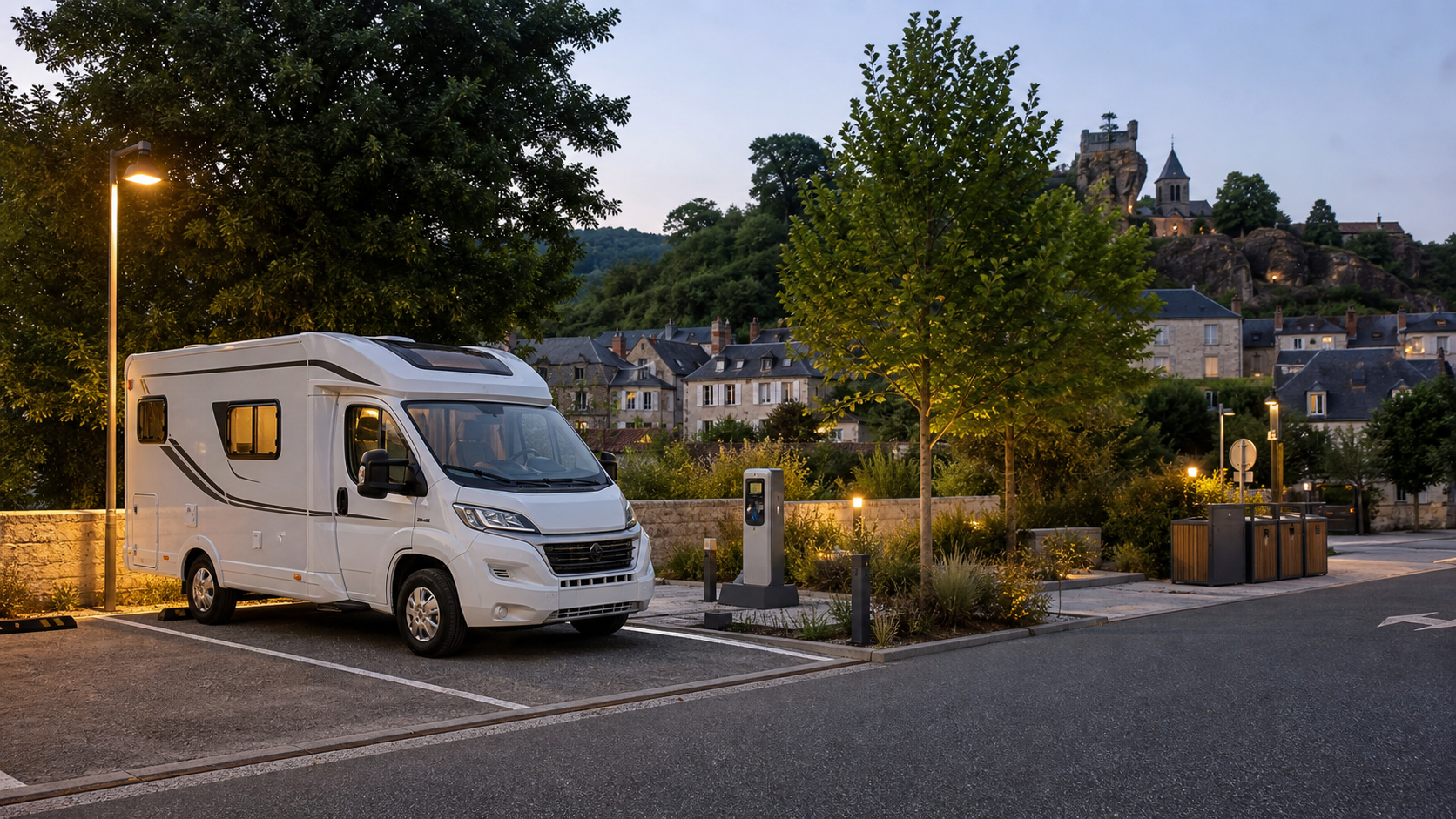
Overnighting in a motorhome in Europe does not follow one simple rule across every country. Some regions have excellent official stopovers near towns and villages, others are easier with booked campsites, and local signs can quickly restrict even a short stop. The better question is not 'can I sleep anywhere', but 'which kind of stop fits this place and this route'.
The clearest option is a regular campsite. It costs more than a simple parking area, but it usually provides showers, toilets, electricity, fresh water, grey-water disposal and often laundry or a small shop.
Campsites are especially useful if you stay more than one night, travel with children, visit in high season or want to set up chairs, a table and an awning. The trade-off is availability and sometimes limited late arrival.
The second option is a dedicated motorhome stopover. In France these are often called aires; in Germany and Austria, stellplatz; Italy, Spain and other countries have their own local formats.
The place may be a simple municipal area, a parking lot near a sports facility, a winery stop or a managed site with payment, water and waste disposal. These stops are often cheaper than campsites and work well for transit nights.
The important distinction is that a stopover is not always a campsite. Many places allow sleeping inside the vehicle but do not allow chairs, tables, grills, laundry racks, awnings or occupying the next bay. From the outside, the vehicle should look parked rather than camped. This matters on town car parks, seafronts, beaches and protected natural areas.
Random roadside parking needs more caution. Even when there is no obvious ban, local rules, signs, height barriers, overnight parking limits, private land and protected areas can change the answer. In some places a short rest stop for the driver may be tolerated, but that is not the same as setting up camp. When in doubt, choose an official stop or ask the local tourist office.
Plan each route with margin. For every day, keep one main overnight option and a backup within 20-40 minutes of driving. In high season, book campsites early; for aires and stellplatz, check recent reviews, payment method, water access and length limits. Avoid arriving at a popular stop very late if it is the only realistic place for the night.
A good European overnight stop is not always the one with the most scenic view. More often it is legal, predictable, quiet enough for sleep, useful for water or waste service and easy to leave in the morning. The less you rely on chance, the more the motorhome remains a way to travel rather than a daily logistics problem.
Source: camperhub.io