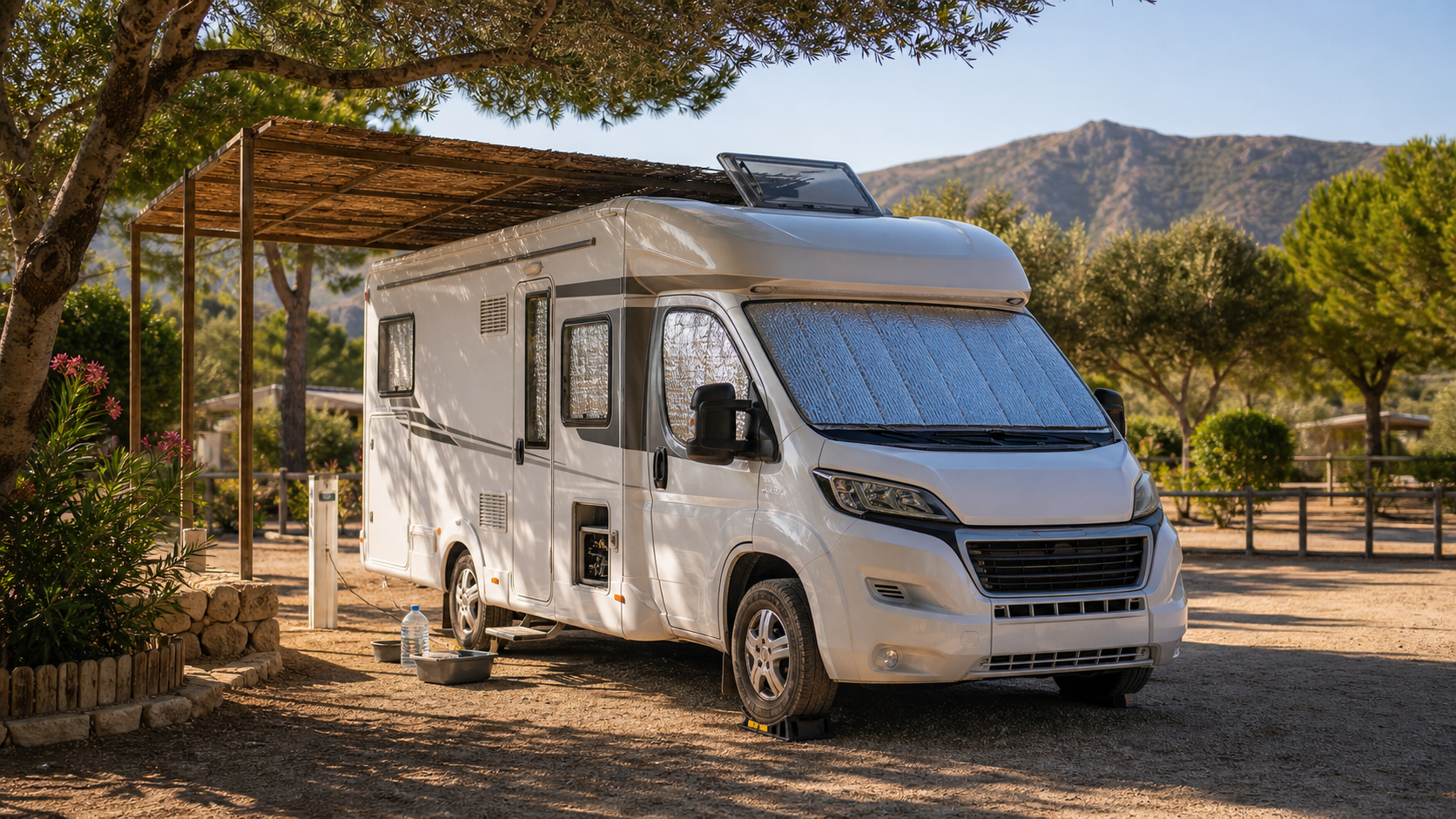
Heat in a motorhome is not only about cabin comfort. High temperatures affect the fridge, batteries, solar panels, tires, water use, sleep and overnight choices. A vehicle that works calmly in spring may need a different routine at midday in July on an exposed pitch.
Start with shade. Good shade reduces heat load better than many small accessories. At a campsite, choose a pitch with morning or daytime cover, orient the vehicle so the largest window area avoids the strongest sun and use external covers on the windscreen. Internal blinds help privacy, but they stop heat less effectively because the glass has already warmed up.
Ventilation should start before the interior becomes uncomfortable. Roof vents, fans and windows work best when they create airflow: one opening for intake and another for exhaust. Safety matters more than airflow, however. Do not leave windows open where that creates a security risk, and never treat ventilation as protection for people or animals inside a closed vehicle.
The fridge works longer and uses more energy in hot weather. Simple habits help: load food that is already cold, avoid unnecessary door openings, keep ventilation grilles clean, do not block airflow around the compressor or absorption unit and, where possible, keep the fridge-vent side out of direct sun. A small thermometer inside the fridge quickly shows whether the system is coping.
The energy calculation changes too. In hot weather, fans, fridge, chargers, pumps and sometimes air conditioning run more often. Solar panels can produce well on clear days, but high panel temperature can reduce efficiency and parking in shade cuts production. Do not assume sunshine automatically solves the energy problem. Work out how many hours of autonomy the battery gives in a hot-weather scenario.
Air conditioning needs a separate reality check. Most roof or household-style air conditioners in motorhomes are meant for shore power or a powerful inverter with a large battery bank. A short battery-powered start is not the same as a cool night. If the route crosses southern Europe in summer, plan campsites with hookup, higher or coastal locations and a daily schedule that avoids long stops on exposed asphalt.
Heat affects the running gear as well. Tire pressure should be checked when the tires are cold, before driving, not after an hour on the highway. Overloading, old tires, high speed and hot asphalt all increase risk. Before the trip, check tire age and condition, the spare, pressure according to the vehicle placard and the actual loaded weight with water, passengers and luggage.
Water and daily rhythm become part of the plan. In heat, drinking water runs out faster, showers are used more often and the grey tank fills sooner.
Build the route around early drives, a long shaded pause during the hottest hours and a calm evening arrival. Good heat preparation is not one expensive device; it is a set of decisions about where to park, how to ventilate, what to cool, how much energy is available and when to move.
Source: camperhub.io