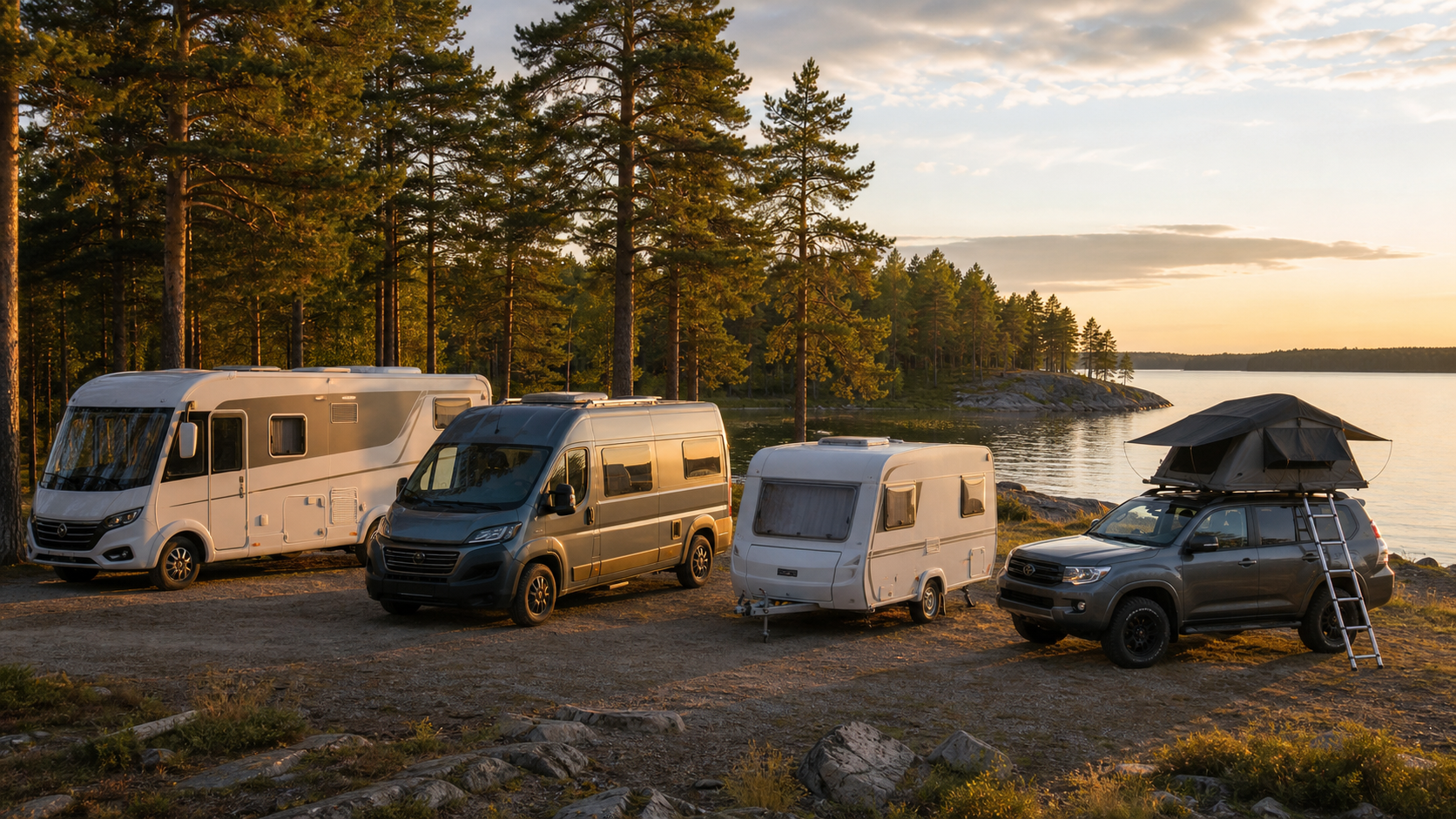
The first RV is rarely chosen in a fully rational way. A bright interior, high roof, permanent bed or rugged off-road package can easily win the first impression. But the format that looks perfect in a dealer photo may feel wrong on the road. The better starting point is not the brand or the price, but the kind of trips you will actually take.
A campervan suits people who want to travel often, park in towns, use narrow roads and keep weekend trips simple. It is the most flexible format for a couple or a small family, especially for trips from a few days to two weeks. The trade-off is space: shower, toilet, storage and kitchen comfort usually involve compromise.
A caravan or travel trailer makes sense if you already own a suitable tow vehicle and want to leave the living space at a campsite while using the car separately. It can be cheaper than a motorized RV, but it requires towing confidence, storage space and attention to weight limits. In countries with strong camping infrastructure, it remains one of the smartest family travel formats.
An alcove motorhome gives more beds and usually works well for families with children. The over-cab bed frees up the cabin, and the interior often includes a proper kitchen, washroom and storage. The cost of that space is fuel consumption, height, wind sensitivity and less relaxed parking. It is comfortable on highways and campsites, less ideal for old towns and tight mountain roads.
An expedition module or 4x4 camper is not necessary for everyone. It becomes valuable when autonomy, rough roads, water capacity, suspension and remote camping matter more than interior volume. These vehicles are expensive to buy and maintain, often need careful payload management and are rarely as spacious as they look in marketing photos.
The simplest method is to write down three realistic trips for the next year. Short getaways, urban parking and one or two travelers point toward a campervan. Family holidays in developed campsites make a trailer or alcove motorhome worth comparing. Remote roads and off-grid nights justify expedition options. A good first RV does not have to be perfect forever; it has to fit your next real trips.
Source: camperhub.io