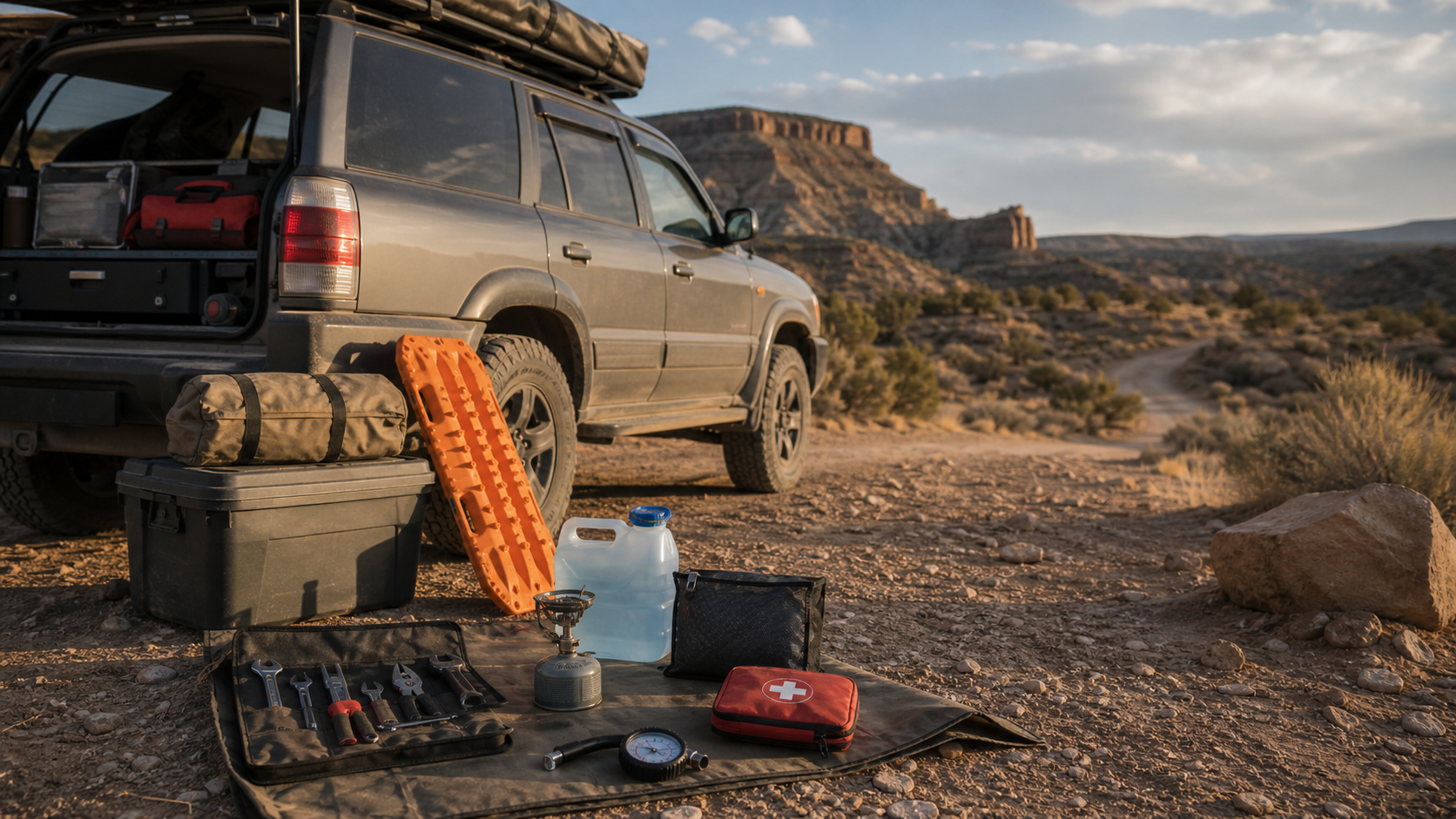
Overlanding can easily become buying things instead of taking trips. Social feeds show racks, awnings, boxes, shovels, fuel cans, suspension kits, fridges, lights and full slide-out kitchens. Some of that can be useful, but beginners do not need to start with a full catalogue. For first routes, safety, water, communication, navigation and an honest understanding of the vehicle matter more.
The first essential item is water. Carry enough for people, cooking, washing and a reserve in case the day runs longer than planned. A simple water container is cheaper and easier than a complex built-in system, and clear markings help you see what is left. Keep basic food, a stove, trash bags and a way to wash hands nearby. Comfort begins with repeatable basics, not with the most expensive awning.
Navigation and communication come next. A phone with offline maps is useful, but it should not be the only plan. Download maps before departure, carry a power bank, keep a paper map for regional awareness and tell someone your route. In areas without mobile coverage, a satellite messenger or tracker can be more valuable than any cosmetic vehicle accessory.
Tires and pressure are the third priority. For mild off-road travel, a good compressor, pressure gauge, puncture repair kit and knowledge of safe pressure reduction can matter more than new suspension. Check the spare wheel, jack, wheel tools and lifting points before the trip. Many problems begin not on dramatic trails, but with a simple puncture far from service.
Recovery gear should match the route and the vehicle. A sensible beginner kit includes gloves, rated soft shackles or a strap, recovery boards, a shovel and knowledge of safe recovery points. A winch is not necessary for everyone and requires practice. If you are traveling with one vehicle, choosing a more modest route is wiser than buying equipment you do not yet know how to use.
Tools and spare parts should be practical too. Carry tools that fit your vehicle, a light, tape, zip ties, fuses, basic fluids, a first-aid kit and fire protection. Expensive boxes do not replace knowledge. Before the first trip, changing a wheel at home, testing the compressor and setting up camp in the driveway can teach more than another accessory order.
The best beginner rule is to buy after trips, not before them. Drive a simple route, write down what was genuinely missing and improve the system gradually. Overlanding is not a contest in how many brackets are attached to the vehicle. It is the ability to travel calmly, sleep outside, return safely and make the next route a little more ambitious.
Source: camperhub.io