A first motorhome trip almost always costs more than the neat route on the map suggests. It is easy to add up rental, fuel and a few overnight stops, but the real budget lives in the details: toll roads, insurance, parking, gas, water, electricity, groceries, campsite service fees and a reserve for beginner mistakes.
Start with the daily cost of the vehicle. If you are renting, look beyond the headline rate and check mileage limits, deposit, insurance excess, second-driver fees, cleaning, bedding and kitchen kits. A cheap offer can become ordinary once every necessary item is added separately. If you own the vehicle, the same trip budget should include preparation, consumables, inspection and possible small repairs.
Fuel should be estimated with a margin. Real motorhome consumption depends on height, weight, speed, wind and terrain.
A compact campervan may stay close to a passenger van, while a large alcove or integrated motorhome can use much more on the motorway. For planning, multiply distance by expected consumption and add 10-15 percent because first trips often include detours, wrong turns, parking searches and slower driving.
Overnight stops are the second major line. Wild camping is not always legal or comfortable, especially if you need showers, electricity, grey-water disposal and a quiet night. Campsites, aire stops and stellplatz areas differ in price and rules. Some charge per pitch, others per person, electricity, pets or late departure. In popular summer regions, it is worth reserving part of the budget with bookings in advance.
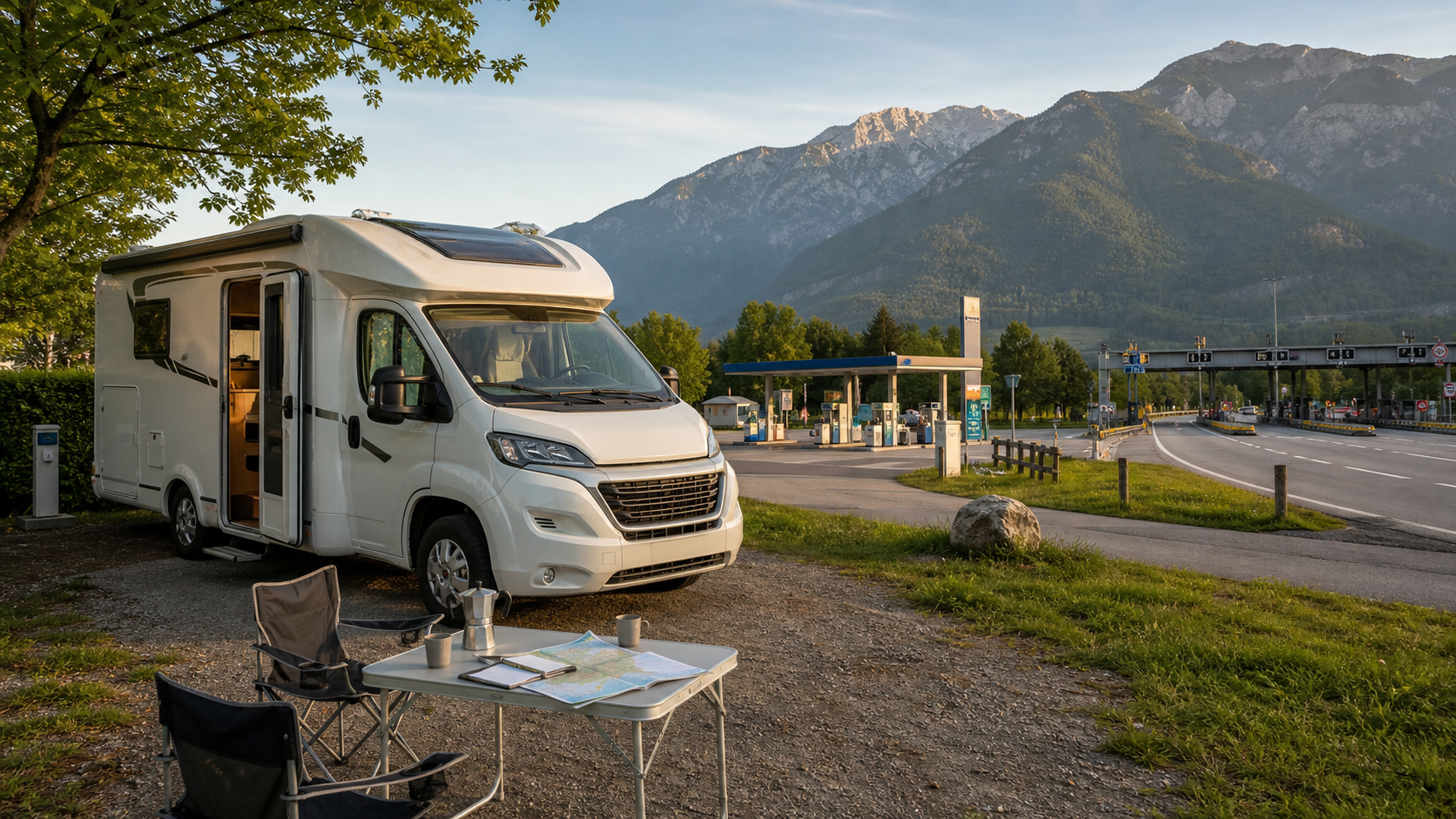
Tolls and urban restrictions are easy to forget. In France, Italy, Spain and several other countries, motorways can add a meaningful amount to the route, and vehicle height or weight may change the tariff category. Add parking outside cities, ferries, low-emission zones, vignettes and paid tunnels where relevant. The goal is not to avoid every paid road; sometimes a faster motorway saves fuel, time and stress.
The most useful first-trip budget has three lines: fixed costs, variable costs and reserve. Fixed costs include rental or vehicle preparation, insurance and documents.
Variable costs include fuel, overnight stops, roads, food and activities. The reserve should be 10-20 percent for small failures, route changes or an extra campsite night.
This kind of planning does not remove the romance of the road; it makes the trip calmer.
Source: camperhub.io