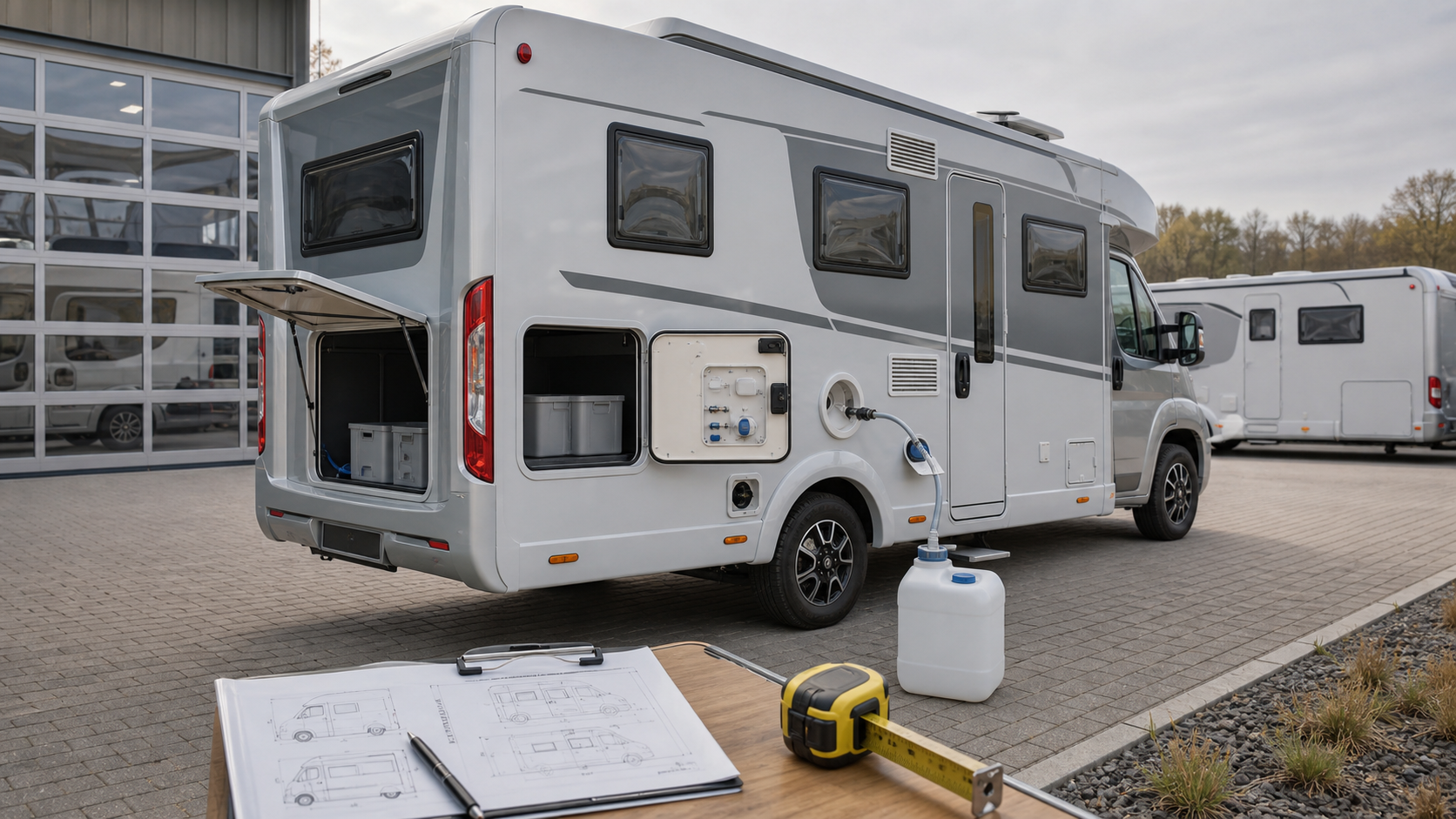
Motorhome specifications are easy to read like a comfort catalogue: length, width, beds, fridge, shower and seats. On the road, other numbers often matter more. Weight, payload, wheelbase, water capacity, batteries and heating determine how calmly the vehicle drives, where it can park and how long it can stay away from campsites.
The most important line is maximum authorized mass. In Europe, many motorhomes are designed around 3.5 tonnes because that weight often remains within a familiar driving licence category.
The problem is that attractive equipment quickly uses the margin: awning, bike rack, solar panels, second battery, water, gas, passengers and luggage. If payload is low, the motorhome can look practical on paper and become stressful in use.
Payload is not a small brochure detail; it is the space left for real life. It should be calculated from the actual running weight of the specific vehicle, not only from an ideal catalogue figure. Ask for weighing data if available, or at least check the installed equipment carefully. A full water tank, two bikes and family luggage can unexpectedly remove the remaining margin.
Length and wheelbase affect more than parking. A long wheelbase can make motorway driving calmer and usually creates more interior space, but it is less relaxed on narrow streets, ferries, mountain roads and uneven campsite entrances. Rear overhang matters too: the longer it is, the more carefully you need to approach ramps, tracks and steep exits.
Fresh and grey water tanks reveal real autonomy better than the word 'off-grid' in a description. A 100-litre fresh tank may disappear quickly with a family of four, especially if showers are used. Check how easy it is to refill water, where the drain is located, whether the tanks are protected for winter and how accessible pumps and filters are for service.
Electrical specs are another layer. Battery capacity, battery type, solar power, inverter size and alternator charging determine how long you can use lights, fridge, laptop, heater and water pump without shore power. Do not compare only amp-hours. Real appliance consumption and charging speed are just as important.
A useful way to read specs is to translate every number into a travel scenario. How many people are coming? How much water will you use per day? Where will bikes go? Do you need winter capability? Can the vehicle stay within legal weight after loading? If a number does not answer a practical question, it may be only catalogue decoration. If it does, it helps you choose a motorhome that works beyond the showroom.
Source: camperhub.io